 Image 1 of 3
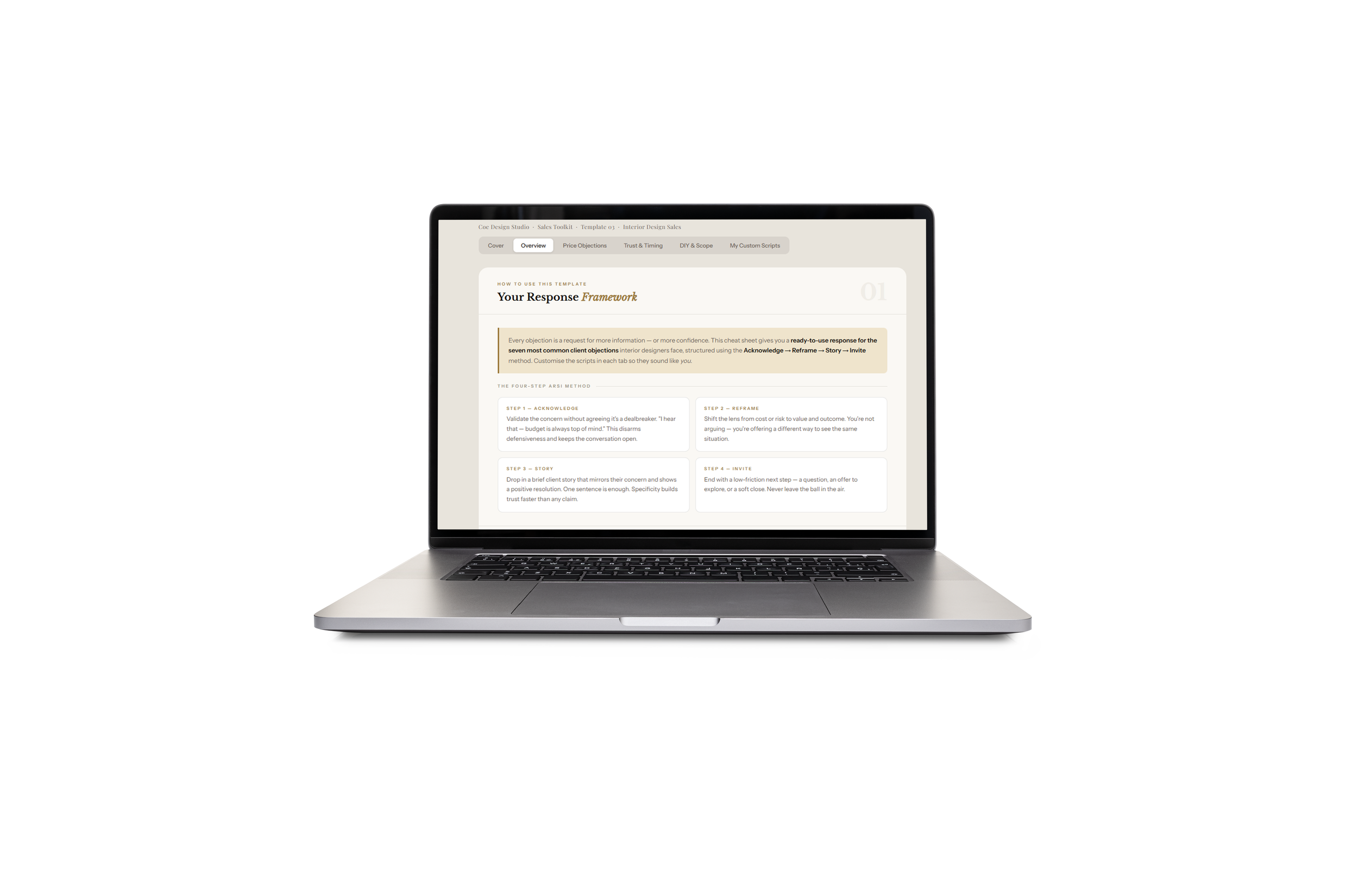 Image 2 of 3
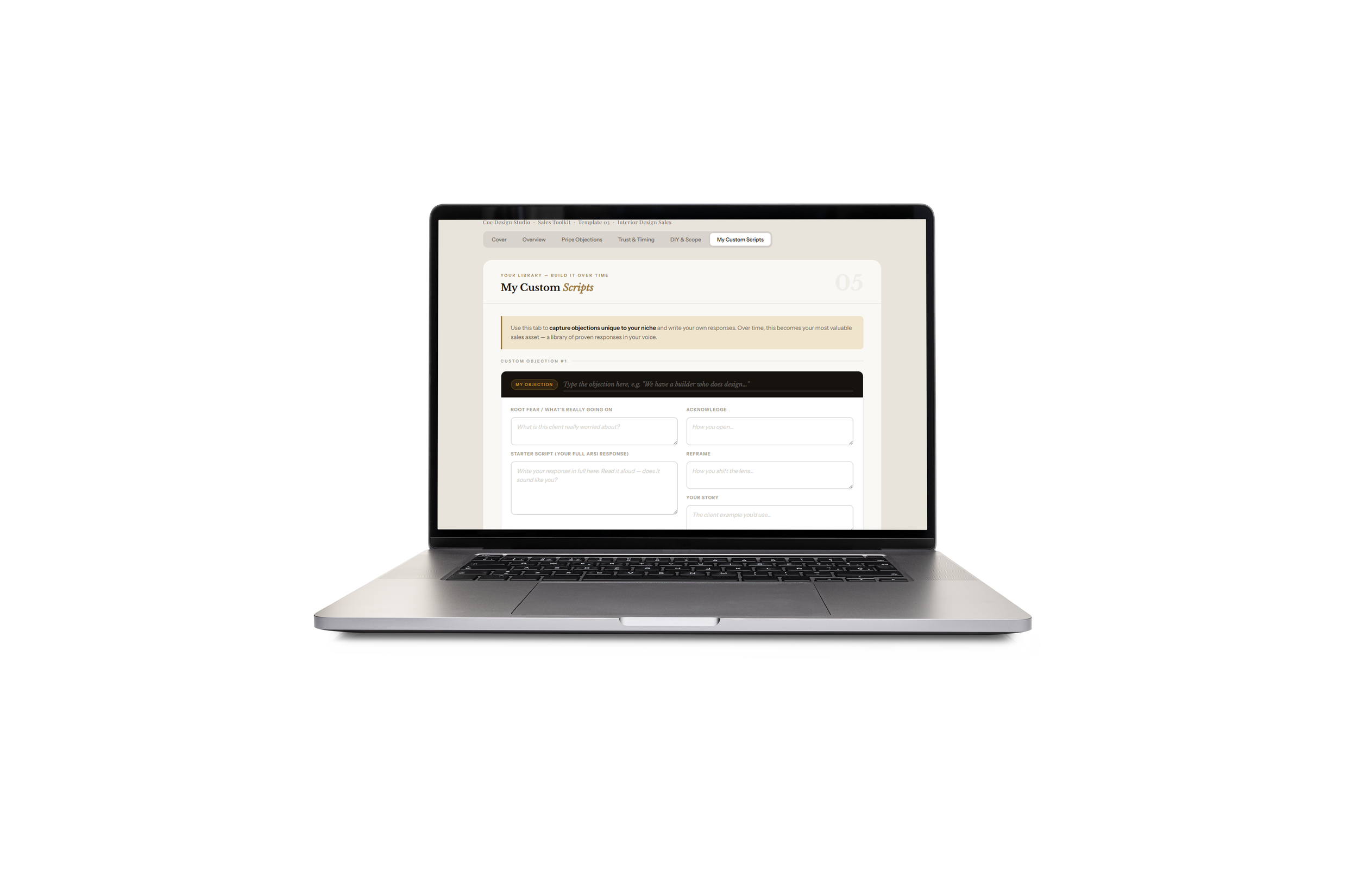 Image 3 of 3
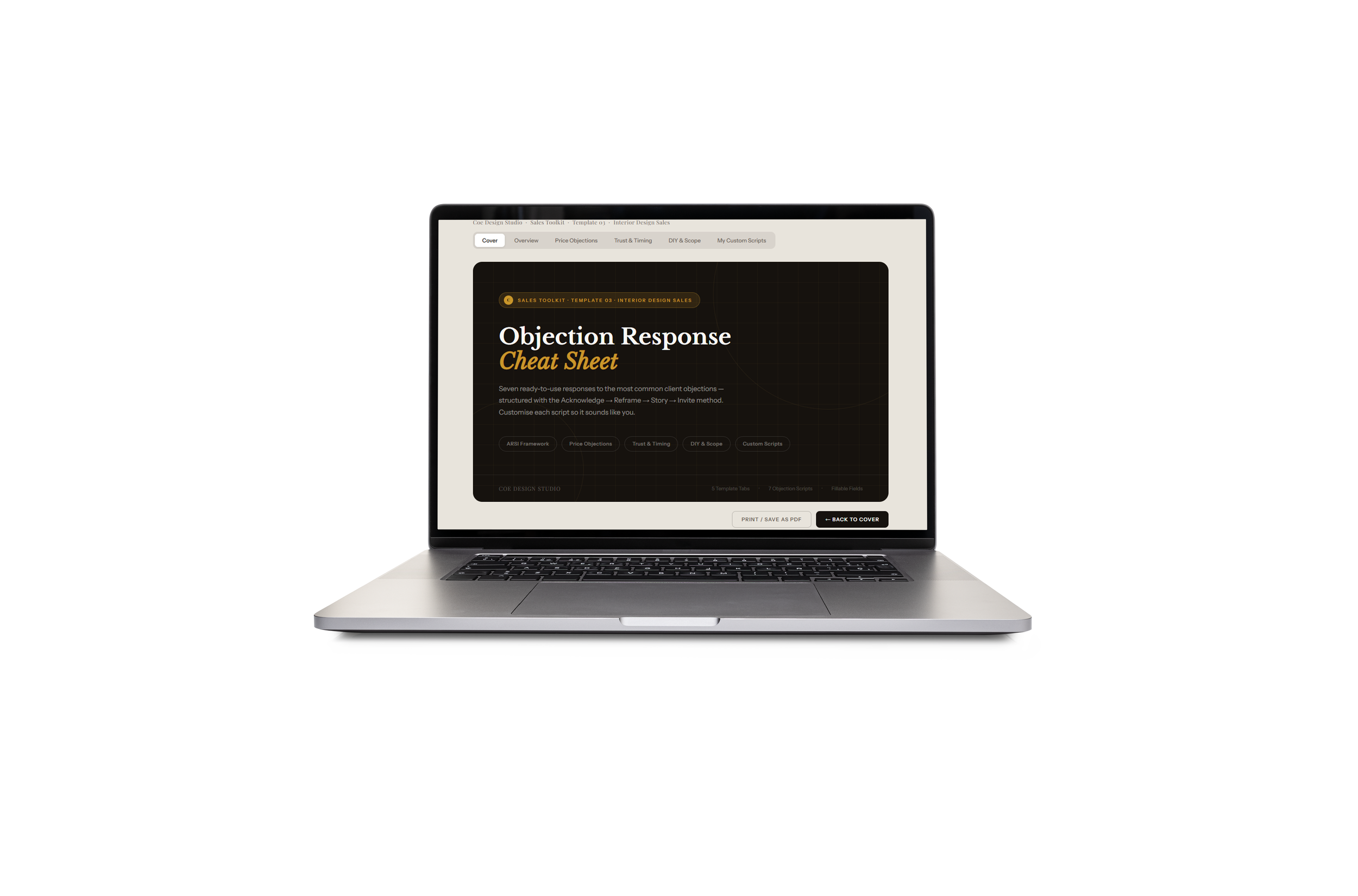
This downloadable HTML file gives you a calm, structured response to every common objection interior designers face — so you stop losing work in the conversation after the proposal lands.
Purpose
Replace improvised, defensive responses with a repeatable framework that keeps the conversation moving.
Help you hear what objections actually mean — and respond to the real concern, not the surface one.
Build confidence so that when a client says "it's too expensive" or "we need to think about it," you know exactly what to do next.
Turn the most common objection scenarios into practised skills, not stressful surprises.
What's included
The ARSI Framework (Acknowledge–Reframe–Share–Invite) explained and applied — a four-step response structure that works across every objection type without sounding scripted.
Pre-written ARSI responses for the seven most common interior design sales objections
Editable "your version" fields for every response, so you can adapt the language to your voice and niche.
An objection decoder: what the client is really asking behind each objection, so your response addresses the actual concern.
How it helps you win
Stops deals stalling at the post-proposal stage: most work is lost not because of a bad proposal, but because of an unconvincing response to a predictable objection.
Builds composure: knowing you have a framework means you're not improvising in a high-stakes moment.
Makes objections feel like signals: ARSI reframes objections as information, not rejection — so you respond with curiosity rather than defensiveness.
Speeds up the close: a well-handled objection often moves the conversation forward faster than avoiding it.
Who this is for
Interior designers who freeze or over-explain when a client pushes back on price or scope.
Designers who have strong proposals but inconsistent conversion after the proposal is sent.
Studio owners who want to train themselves or team members on consistent, confident objection handling.
How to use
Read through the ARSI Framework tab to understand the logic before the specific scripts.
Review each objection and the pre-written ARSI response — then write your own version in the editable field.
Use the practice prompts to rehearse out loud — the scripts work best when they're internalised, not read.
Add objections you encounter to the notes tab and build your personal response bank over time.
Deliverable details
File type: single downloadable HTML file that works offline — lightweight and accessible.
Editable: fillable fields throughout; adapt every response to your niche and voice.
Why this matters
The difference between designers who close consistently and those who don't is rarely the proposal — it's what happens in the conversation after it lands. This template gives you a composed, client-centred response to every common objection, so you stop losing work you should have won.
This downloadable HTML file gives you a calm, structured response to every common objection interior designers face — so you stop losing work in the conversation after the proposal lands.
Purpose
Replace improvised, defensive responses with a repeatable framework that keeps the conversation moving.
Help you hear what objections actually mean — and respond to the real concern, not the surface one.
Build confidence so that when a client says "it's too expensive" or "we need to think about it," you know exactly what to do next.
Turn the most common objection scenarios into practised skills, not stressful surprises.
What's included
The ARSI Framework (Acknowledge–Reframe–Share–Invite) explained and applied — a four-step response structure that works across every objection type without sounding scripted.
Pre-written ARSI responses for the seven most common interior design sales objections
Editable "your version" fields for every response, so you can adapt the language to your voice and niche.
An objection decoder: what the client is really asking behind each objection, so your response addresses the actual concern.
How it helps you win
Stops deals stalling at the post-proposal stage: most work is lost not because of a bad proposal, but because of an unconvincing response to a predictable objection.
Builds composure: knowing you have a framework means you're not improvising in a high-stakes moment.
Makes objections feel like signals: ARSI reframes objections as information, not rejection — so you respond with curiosity rather than defensiveness.
Speeds up the close: a well-handled objection often moves the conversation forward faster than avoiding it.
Who this is for
Interior designers who freeze or over-explain when a client pushes back on price or scope.
Designers who have strong proposals but inconsistent conversion after the proposal is sent.
Studio owners who want to train themselves or team members on consistent, confident objection handling.
How to use
Read through the ARSI Framework tab to understand the logic before the specific scripts.
Review each objection and the pre-written ARSI response — then write your own version in the editable field.
Use the practice prompts to rehearse out loud — the scripts work best when they're internalised, not read.
Add objections you encounter to the notes tab and build your personal response bank over time.
Deliverable details
File type: single downloadable HTML file that works offline — lightweight and accessible.
Editable: fillable fields throughout; adapt every response to your niche and voice.
Why this matters
The difference between designers who close consistently and those who don't is rarely the proposal — it's what happens in the conversation after it lands. This template gives you a composed, client-centred response to every common objection, so you stop losing work you should have won.