 Image 1 of 3
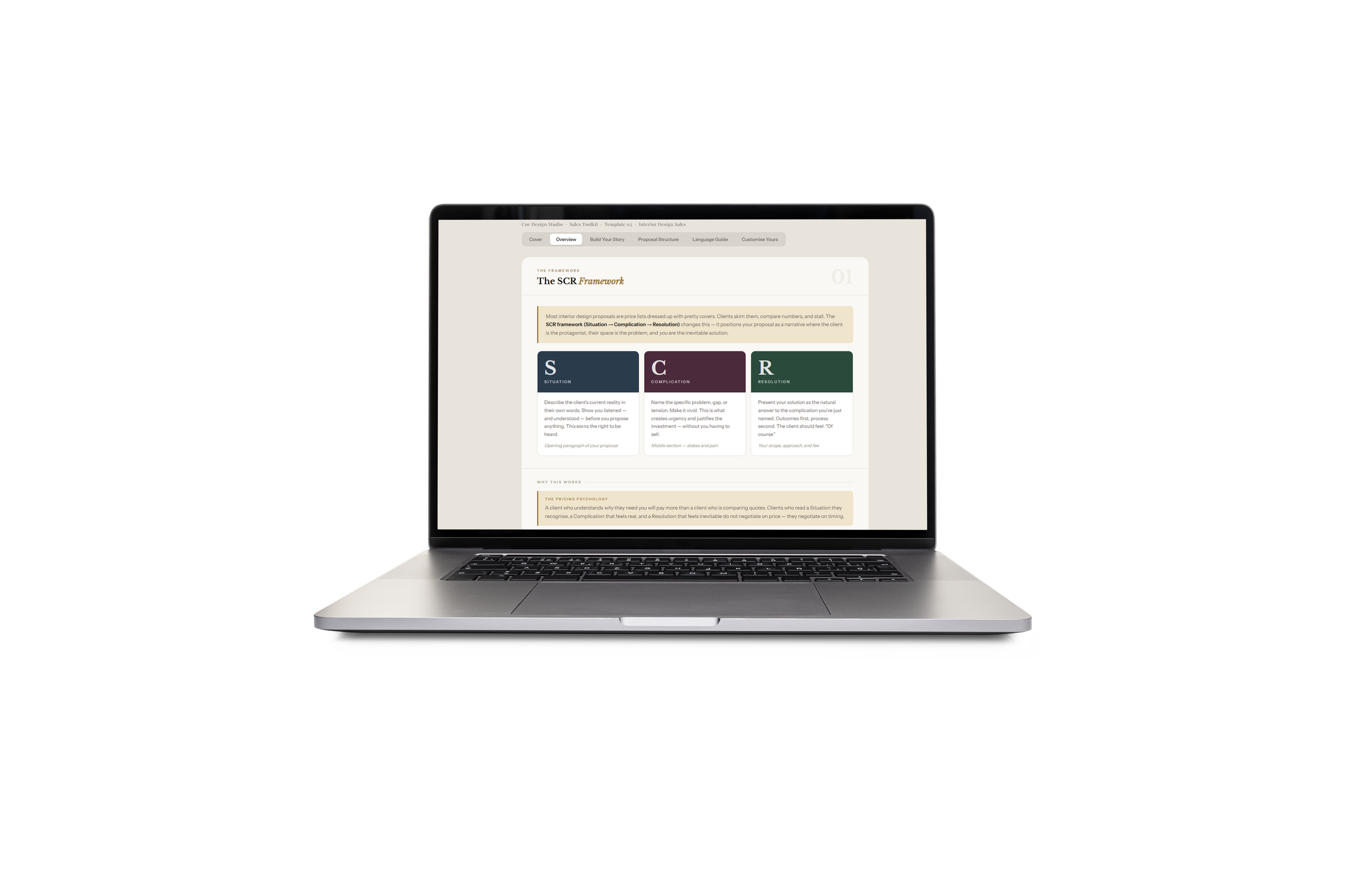 Image 2 of 3
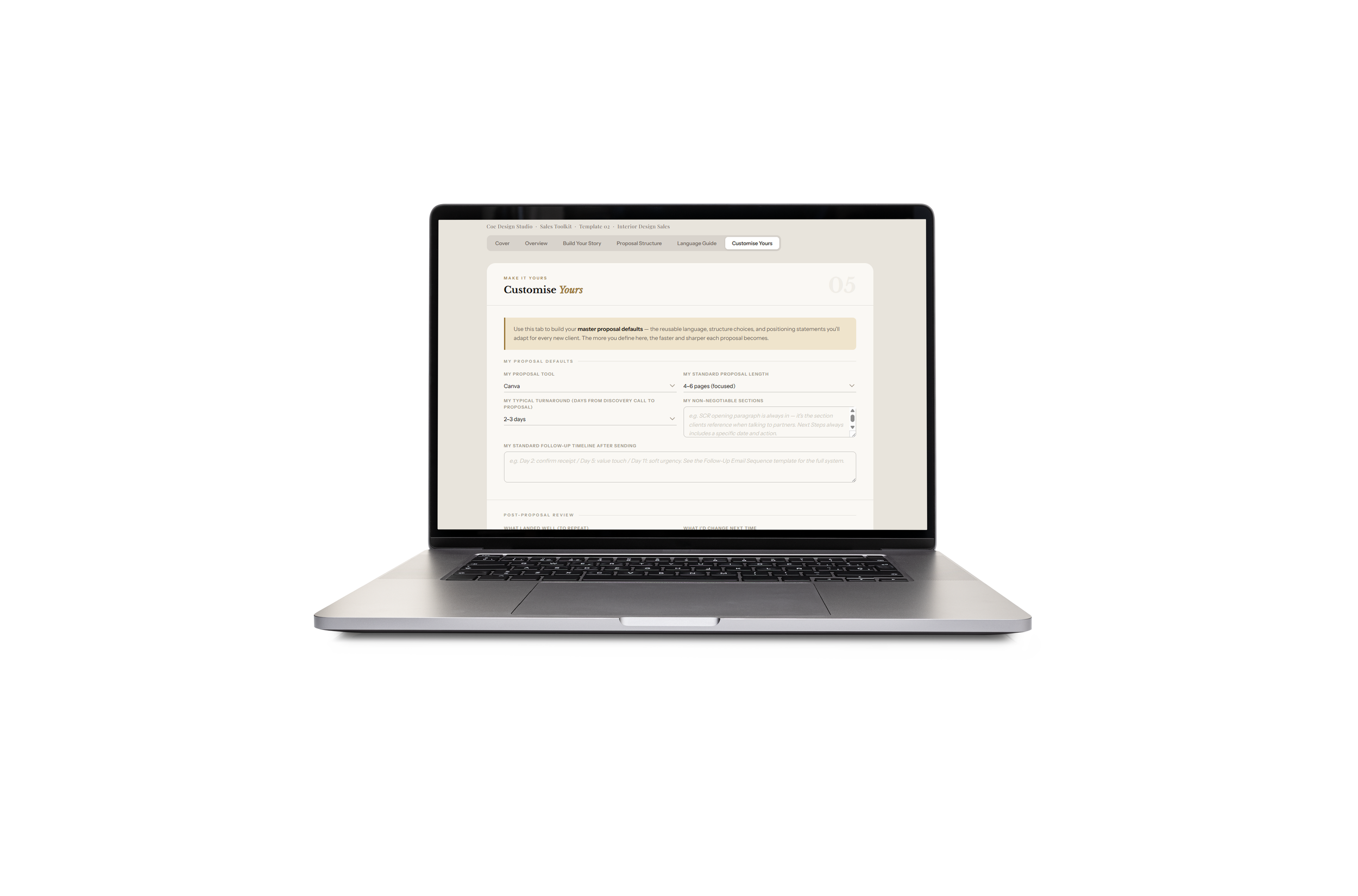 Image 3 of 3
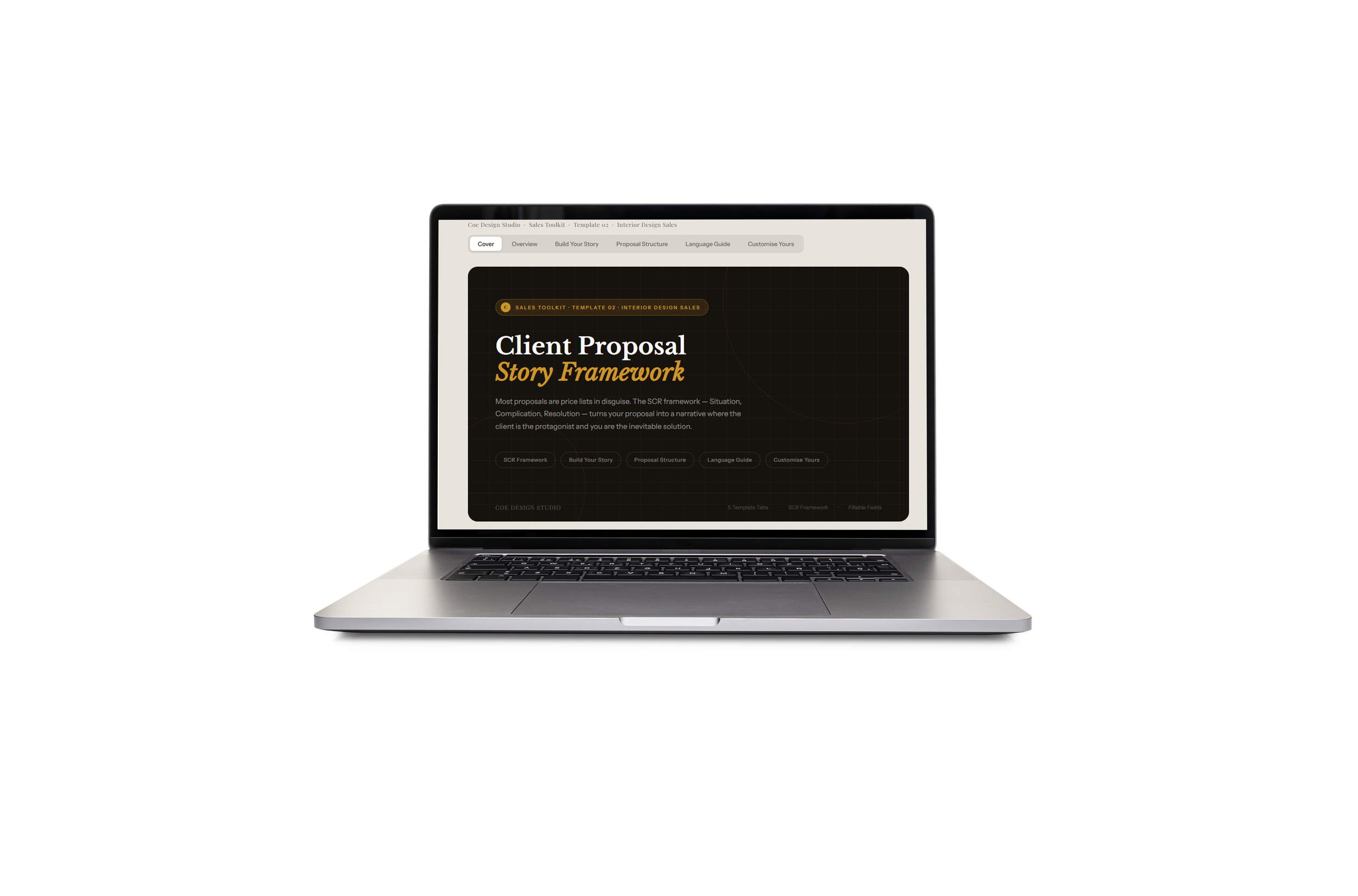
This downloadable HTML file transforms your proposals from spec sheets into narrative-led documents that build the case for your value before a single line item appears — using a proven story structure to make a yes feel inevitable.
Purpose
Replace the generic scope-and-price proposal format with a six-act story structure that builds client confidence as they read.
Position your expertise and approach as the logical resolution to the client's specific situation.
Create proposals that feel personal, considered, and different — not templated.
Give you a repeatable narrative architecture you can use for every project type and fee level.
What's included
The SCR Framework (Situation–Complication–Resolution) explained with visual examples.
A fillable Story Builder to draft each act for a specific proposal — with example language and prompts for each section.
Example proposal language — plug-and-play phrases for openings, transitions, scope framing, and closing vision.
A Proposal Audit checklist to review a draft proposal against the framework before you send it.
A notes tab to capture client context, key phrases to mirror, and review dates.
How it helps you win
Makes proposals feel personal: reflecting the client's exact situation back to them signals that you listened and understood.
Builds value before the fee: by the time the client reaches the investment section, they're already convinced of the need.
Differentiates your approach: most interior designers send scope lists; a narrative proposal is immediately distinctive.
Reduces negotiation: proposals framed around outcomes and risk create a stronger rationale for your fee than a list of hours ever will.
Improves consistency: a fixed arc means every proposal you write has the same structural quality, regardless of how much time you have.
Who this is for
Interior designers who write custom proposals for residential or commercial projects.
Designers who are winning some work but want a higher conversion rate without discounting.
Studio owners who want to produce stronger proposals faster, with a framework anyone on the team can follow.
How to use
Review the SCR Framework tab to internalise the story logic.
Open the Story Builder and complete each act for your current proposal using your discovery call notes.
Use the Example Language tab to sharpen phrasing — especially for acts two, four, and six.
Run the Proposal Audit checklist before sending.
Deliverable details
File type: single downloadable HTML file — lightweight and accessible.
Editable: fillable fields throughout; HTML comments indicate where to customise.
Why this matters
Most proposals fail not because the scope is wrong, but because the story isn't told. This template gives you a structured way to write proposals that clients feel — making the decision to hire you an easy one.
This downloadable HTML file transforms your proposals from spec sheets into narrative-led documents that build the case for your value before a single line item appears — using a proven story structure to make a yes feel inevitable.
Purpose
Replace the generic scope-and-price proposal format with a six-act story structure that builds client confidence as they read.
Position your expertise and approach as the logical resolution to the client's specific situation.
Create proposals that feel personal, considered, and different — not templated.
Give you a repeatable narrative architecture you can use for every project type and fee level.
What's included
The SCR Framework (Situation–Complication–Resolution) explained with visual examples.
A fillable Story Builder to draft each act for a specific proposal — with example language and prompts for each section.
Example proposal language — plug-and-play phrases for openings, transitions, scope framing, and closing vision.
A Proposal Audit checklist to review a draft proposal against the framework before you send it.
A notes tab to capture client context, key phrases to mirror, and review dates.
How it helps you win
Makes proposals feel personal: reflecting the client's exact situation back to them signals that you listened and understood.
Builds value before the fee: by the time the client reaches the investment section, they're already convinced of the need.
Differentiates your approach: most interior designers send scope lists; a narrative proposal is immediately distinctive.
Reduces negotiation: proposals framed around outcomes and risk create a stronger rationale for your fee than a list of hours ever will.
Improves consistency: a fixed arc means every proposal you write has the same structural quality, regardless of how much time you have.
Who this is for
Interior designers who write custom proposals for residential or commercial projects.
Designers who are winning some work but want a higher conversion rate without discounting.
Studio owners who want to produce stronger proposals faster, with a framework anyone on the team can follow.
How to use
Review the SCR Framework tab to internalise the story logic.
Open the Story Builder and complete each act for your current proposal using your discovery call notes.
Use the Example Language tab to sharpen phrasing — especially for acts two, four, and six.
Run the Proposal Audit checklist before sending.
Deliverable details
File type: single downloadable HTML file — lightweight and accessible.
Editable: fillable fields throughout; HTML comments indicate where to customise.
Why this matters
Most proposals fail not because the scope is wrong, but because the story isn't told. This template gives you a structured way to write proposals that clients feel — making the decision to hire you an easy one.