 Image 1 of 3
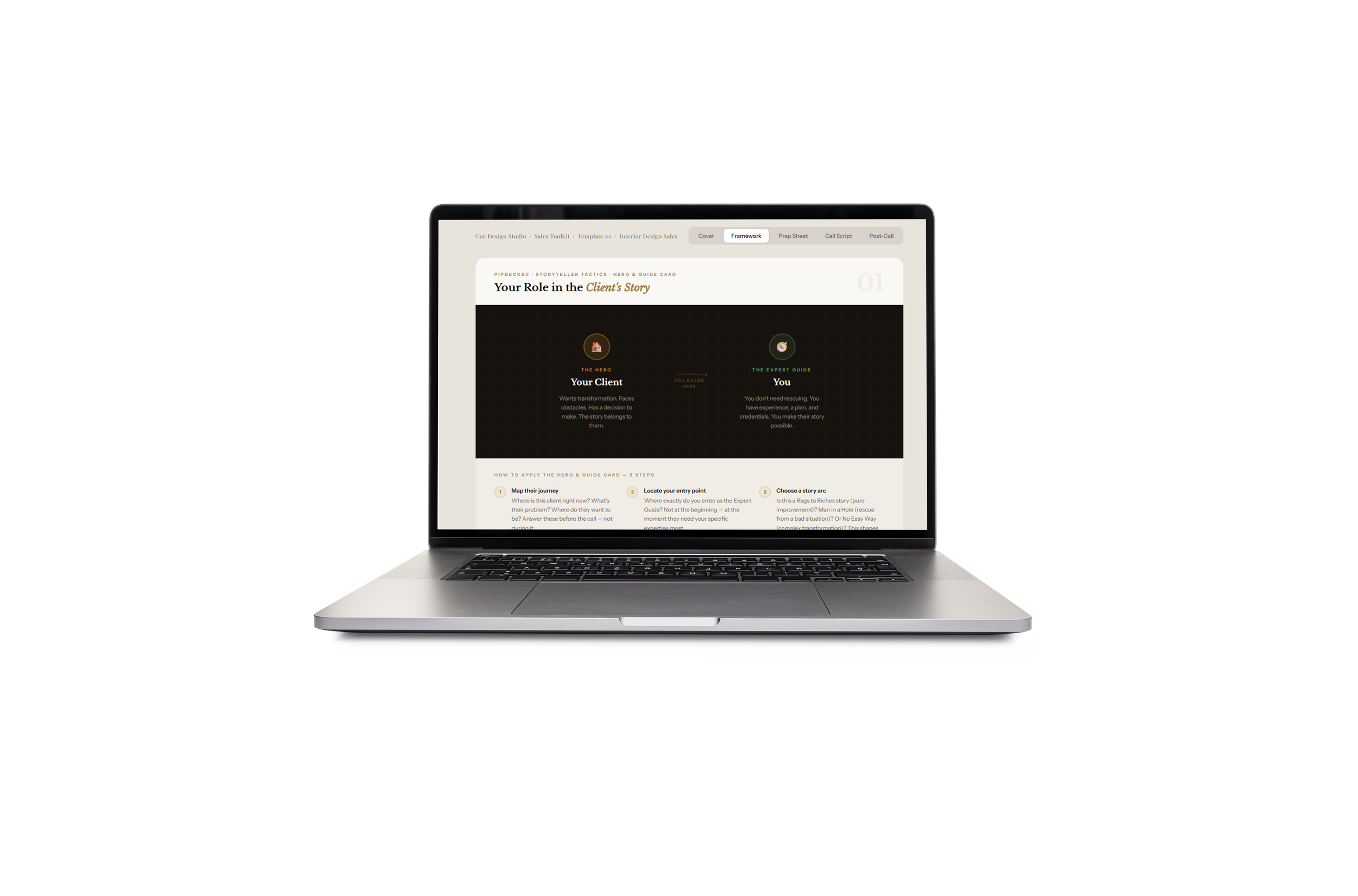 Image 2 of 3
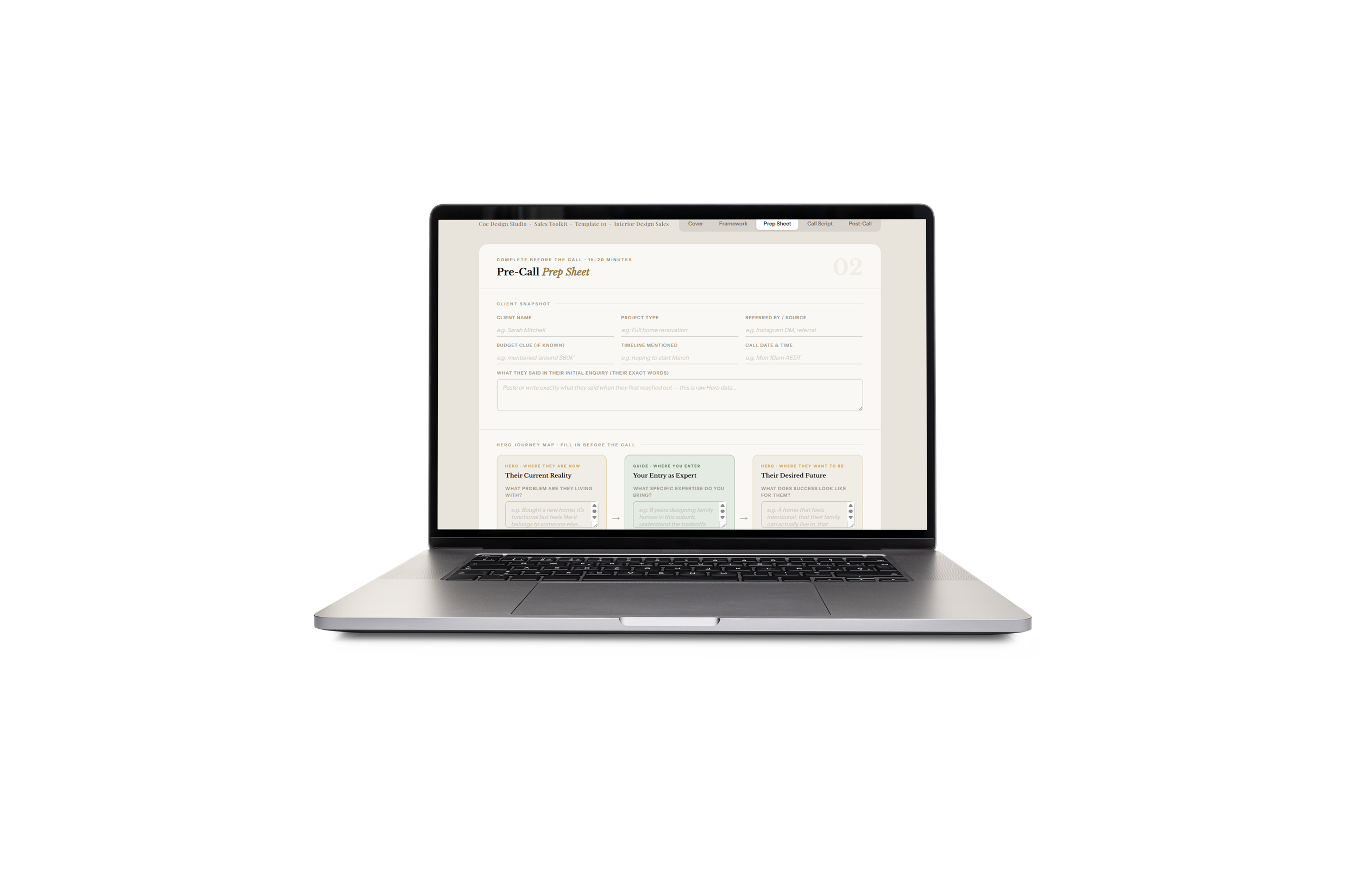 Image 3 of 3
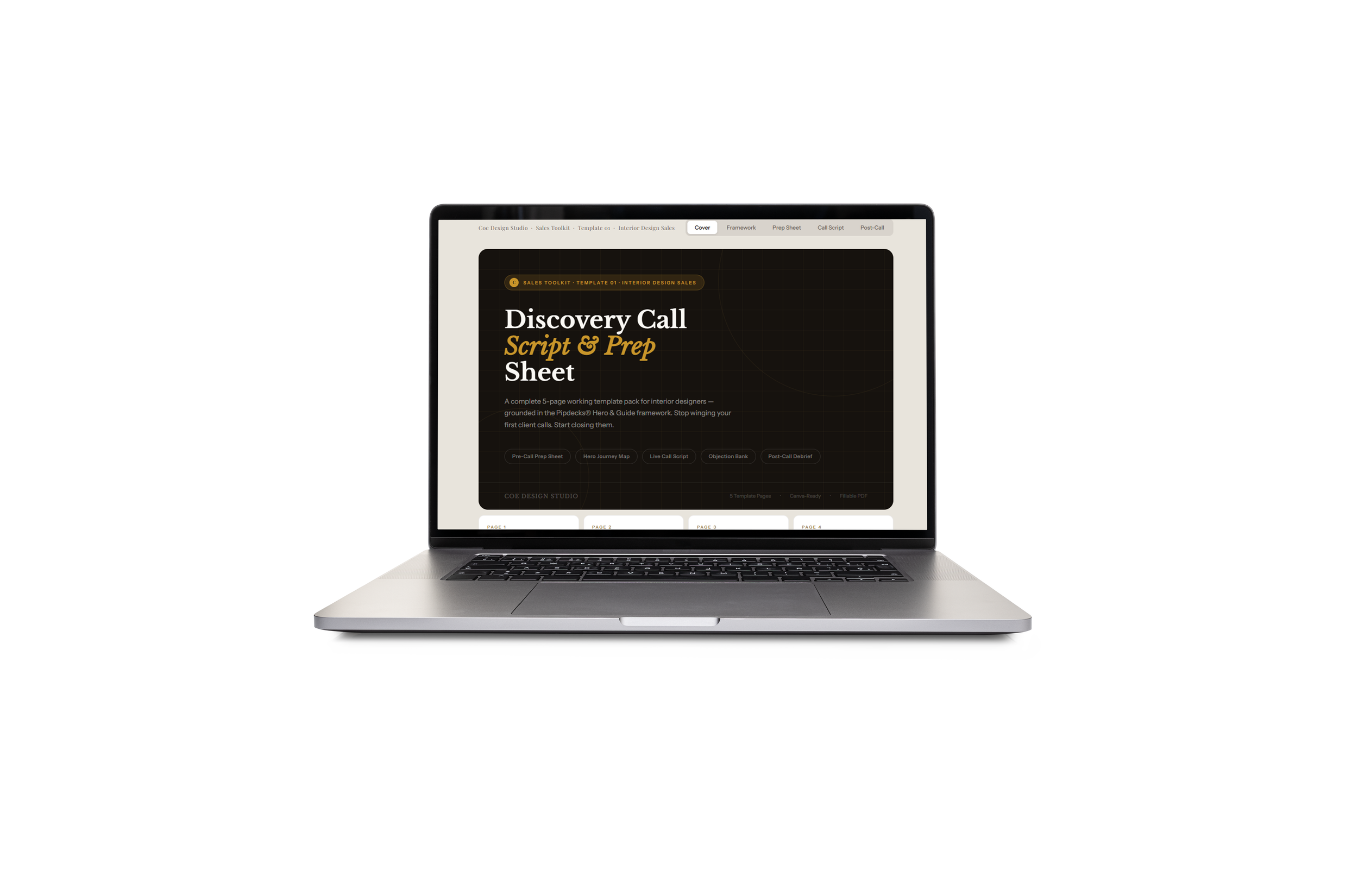
This downloadable HTML file gives you a structured, repeatable framework for running discovery calls — so you walk in prepared, ask the right questions, and walk out with everything you need to write a proposal that wins.
Purpose
Give you a consistent, professional call structure you can use verbatim or adapt to your style.
Help you ask questions that position you as a consultant, not a vendor.
Surface the real problem — not just the surface symptom — and the business context you need to craft a compelling proposal.
Qualify prospects early so you invest time only in opportunities that can become successful engagements.
What's included
Structured discovery script with an opening, agenda-setting section, and call close — ready to use from your first call.
Question flows organised by objective:
Business context and project goals
Current situation, constraints, and past attempts
Stakeholders, decision process, budget, and timeline
Success metrics and what "done well" looks like
Risks, dependencies, and scope clarity
The Hero & Guide framework applied to your opening — so you position yourself as the expert guide, not the hero fighting for the job.
Conditional prompts and suggested branching to handle evasive or underinformed prospects.
Pre-call prep fields to capture research, context, and your strategic intent before the call starts.
A post-call notes template that maps directly into a proposal outline.
Pipdecks® Storyteller Tactics reference — the deck that underpins the Hero & Guide positioning used throughout.
How it helps you win
Positions you as a consultative partner: question sequences are designed to draw out strategic intent, not just project details.
Reduces scope creep: getting clarity on what's in and out of scope at discovery prevents misaligned expectations before any proposal is written.
Improves proposal accuracy: captured context and prioritised goals let you recommend the right scope at the right budget.
Speeds proposal production: the post-call notes template is structured to feed directly into a proposal outline.
Increases conversion quality: qualification questions filter poor-fit leads before you invest hours in a full proposal.
Who this is for
Interior designers who run paid or unpaid discovery calls before submitting proposals.
Designers who want to move away from quoting from a brief and toward consultative, problem-led selling.
Studio owners who want a consistent sales process they can train staff or collaborators on.
How to use
Pre-call: complete the prep fields — research the client, set your strategic intent, review the question flows.
During the call: follow the script and question flows; capture answers in the notes template.
Post-call: complete the post-call checklist and map your notes into your proposal structure.
Deliverable details
File type: single downloadable HTML file — lightweight and accessible.
No external dependencies: all styling and scripts are embedded so it works offline.
Editable: fillable fields throughout; HTML comments indicate where to customise phrasing and company-specific details.
Why this matters
A weak discovery process leads to misunderstood scope, inaccurate pricing, and proposals that fail to win — or win the wrong work. This template gives you a practical, structured starting point to run discovery like a consultant: uncover the real problem, qualify fit, and set up proposals that close.
This downloadable HTML file gives you a structured, repeatable framework for running discovery calls — so you walk in prepared, ask the right questions, and walk out with everything you need to write a proposal that wins.
Purpose
Give you a consistent, professional call structure you can use verbatim or adapt to your style.
Help you ask questions that position you as a consultant, not a vendor.
Surface the real problem — not just the surface symptom — and the business context you need to craft a compelling proposal.
Qualify prospects early so you invest time only in opportunities that can become successful engagements.
What's included
Structured discovery script with an opening, agenda-setting section, and call close — ready to use from your first call.
Question flows organised by objective:
Business context and project goals
Current situation, constraints, and past attempts
Stakeholders, decision process, budget, and timeline
Success metrics and what "done well" looks like
Risks, dependencies, and scope clarity
The Hero & Guide framework applied to your opening — so you position yourself as the expert guide, not the hero fighting for the job.
Conditional prompts and suggested branching to handle evasive or underinformed prospects.
Pre-call prep fields to capture research, context, and your strategic intent before the call starts.
A post-call notes template that maps directly into a proposal outline.
Pipdecks® Storyteller Tactics reference — the deck that underpins the Hero & Guide positioning used throughout.
How it helps you win
Positions you as a consultative partner: question sequences are designed to draw out strategic intent, not just project details.
Reduces scope creep: getting clarity on what's in and out of scope at discovery prevents misaligned expectations before any proposal is written.
Improves proposal accuracy: captured context and prioritised goals let you recommend the right scope at the right budget.
Speeds proposal production: the post-call notes template is structured to feed directly into a proposal outline.
Increases conversion quality: qualification questions filter poor-fit leads before you invest hours in a full proposal.
Who this is for
Interior designers who run paid or unpaid discovery calls before submitting proposals.
Designers who want to move away from quoting from a brief and toward consultative, problem-led selling.
Studio owners who want a consistent sales process they can train staff or collaborators on.
How to use
Pre-call: complete the prep fields — research the client, set your strategic intent, review the question flows.
During the call: follow the script and question flows; capture answers in the notes template.
Post-call: complete the post-call checklist and map your notes into your proposal structure.
Deliverable details
File type: single downloadable HTML file — lightweight and accessible.
No external dependencies: all styling and scripts are embedded so it works offline.
Editable: fillable fields throughout; HTML comments indicate where to customise phrasing and company-specific details.
Why this matters
A weak discovery process leads to misunderstood scope, inaccurate pricing, and proposals that fail to win — or win the wrong work. This template gives you a practical, structured starting point to run discovery like a consultant: uncover the real problem, qualify fit, and set up proposals that close.